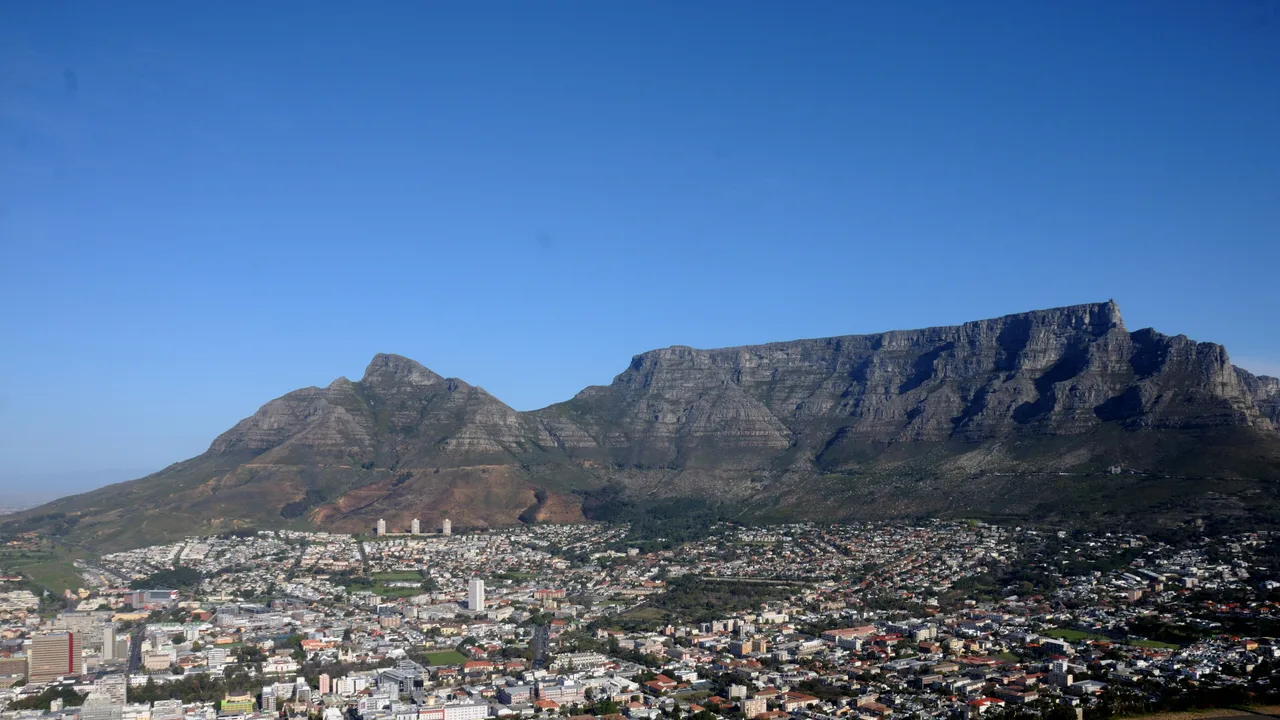
A first trip to Cape Town needs four nights, one of them kept free for Table Mountain in case the cableway is shut on the day you planned. Base yourself on the Atlantic side or in the city bowl: a mountain, two oceans’ worth of coast, a historic neighbourhood and a working harbour all sit within a short drive of one another.
New arrivals get caught out by logistics more often than by sights. The airport bus has stopped, the wind changes your itinerary, and a few road and hiking rules deserve a read before you set off; everything dated on this page was checked on 16 November 2026.
Arriving at the airport
Cape Town International is 20 km from the city centre, with a direct link to the city by the N2 freeway, according to Wesgro, the Western Cape’s tourism and investment agency. MyCiTi runs a bus on that corridor, the A01 to the Civic Centre, but its airport-services page said on 16 November 2026 that the service is temporarily suspended. Check that page again before you fly rather than building your arrival around the bus.
That leaves a taxi, a pre-booked transfer, e-hailing or a hire car. If you’re driving from the airport, read the UK Foreign Office’s advice (FCDO, checked on 16 November 2026) first: it reports an increase in violent crime and targeted attacks on visitors driving hired cars to and from the airport, and tells drivers to stick to the M3 and N2 and avoid GPS routes that leave the main roads. It also suggests not dropping off a rental car at night. A late landing is a good reason to book a transfer for the first night and collect the car in daylight. For the legs between cities, the South Africa transport guide compares domestic flights, the Gautrain and app-booked rides, and the car-hire checks cover the driver, the agreement and the inspection at collection.
Where to base yourself
Cape Town sits between the mountain and the sea, so the useful way to read the map is in four pieces.
- City bowl and Bo-Kaap. The downtown streets at the foot of the mountain, with the Company’s Garden, museums and restaurants within walking range. Good for a first trip without a car, and near the road to the cableway.
- V&A Waterfront. The harbour district, with shops, an aquarium, a contemporary art museum and the Robben Island ferries. It is polished and easy, if less local.
- Atlantic Seaboard. Sea Point, Clifton and Camps Bay along the coast west of the mountain: beaches, sunsets and restaurants, and a longer ride into the centre.
- Southern Suburbs. Greener and quieter, with Kirstenbosch on the mountain’s eastern slopes. Suits a longer stay or a car.
A first-time visitor with four nights usually does best splitting the stay: two in the city bowl or Waterfront for the sights, two on the Atlantic side for the beaches. If you’ve only got a long weekend, pick the city bowl and use rides for the coast.
Table Mountain
The mountain is what you see from almost everywhere, and the cableway is the quickest way up it. The full detail lives in the Table Mountain cableway guide; the short version, as the operator listed it on 16 November 2026, is an adult return fare of R475 when booked online, more at the ticket office, on the fare list that runs from 1 July 2026 to 30 June 2027. From 1 December to 31 January the last car up leaves at 20:00, and the first leaves at 07:30.
Two things matter more than the price. The car doesn’t run in strong wind, which is why the plan at the end of this page puts the mountain on day three and keeps day four as the backup. And the mountain is a hiking park, with real risks: the FCDO has warned of attacks on hikers in Table Mountain National Park, and SANParks stresses that it’s a serious mountain even though it stands in a city. The cableway guide sets out the rules for walking up and what the tickets do when the car is closed.
Bo-Kaap and the city bowl
Bo-Kaap sits at the foot of Signal Hill on the edge of the city centre. Cape Town Tourism dates its origins to the 1760s, when rental houses were built for slaves and political exiles brought from other Dutch colonies in the east, and from Africa. Most of them spoke some Malay, which is how the community came to be called Cape Malay. By the tourism board’s account, the bright colours of the flat-roofed houses come from owners painting them once leases that required white were lifted. It also suggests a local cooking tour specialising in traditional Cape Malay treats, or a meal at one of the eateries run by families rooted in the area. The South African food guide explains bobotie and the other dishes you are likely to meet there.
Two stops give the neighbourhood context, both named by Cape Town Tourism: the Auwal Mosque on Dorp Street and the Bo-Kaap Museum on Wale Street, which tells the story of a typical Cape Malay family. It’s a residential neighbourhood, so keep to the streets, be quiet around homes, and ask before you photograph people.
The Waterfront and Robben Island
The V&A Waterfront is a working harbour with the Cape Wheel, shops and restaurants, and Cape Town Tourism lists Zeitz MOCAA, the Two Oceans Aquarium and the Chavonnes Battery Museum among its attractions. It’s the easy afternoon for a grey day when the mountain is shut.
Robben Island’s ferries leave from the Nelson Mandela Gateway at the Waterfront, and you book the tour through the Robben Island Museum’s own site. It’s a World Heritage Site, inscribed in 1999, and the place where Nelson Mandela was held. Book ahead, and leave yourself a day after it in case you need to change the date. The Robben Island guide covers the ticket, the tour on the island and the return crossing.
Beaches and the Peninsula
The Atlantic beaches, Clifton and Camps Bay, face the sunset and are the classic Cape Town afternoon. South of the city, the Peninsula’s national park takes in Boulders and Cape Point. At Boulders, SANParks describes a land-based colony of African penguins, watched from boardwalks where visitors are asked to stay on the planks and not touch or feed the birds. Fees for overseas visitors, gate hours and the boardwalk to the colony are in the Boulders penguin guide. SANParks says the Cape Point and Boulders gates are cash-free, taking debit and credit cards only, and that at Cape Point you make one payment per vehicle, so have a card ready.
Plan for wind as much as sun. SANParks describes a Mediterranean-type climate, with cool, wet winters and warm, dry summers, and says summer brings southeasterly winds. In December 2026 a beach day can be bright and blustery at once.
Kirstenbosch
Kirstenbosch is the national botanical garden, set, in SANBI’s words, against the eastern slopes of Table Mountain, and it lists a tree canopy walkway among its tours. It’s an easy half day, or a place for a late-afternoon walk if the cableway has stalled your plans. Check opening hours and entry on SANBI’s own page before you go.
Beyond the city
Cape Town works as a base for day trips, and three of them stand out. The Cape Winelands start with Stellenbosch, which Cape Town Tourism puts at 50 minutes from the city centre; Franschhoek is about an hour away and Paarl a little over an hour. The Cape Winelands guide covers tastings, the Franschhoek Wine Tram and the law on drinking and driving. For the province beyond those three, from the Cederberg to Cape Agulhas, see the Western Cape guide.
For longer drives, the Garden Route in 10 days by car picks up where Cape Town ends. And if you want animals rather than vineyards, the safari guide sets out how to choose a park and a lodge.
Staying safe
Violent crime can happen anywhere, including tourist destinations and transport hubs, according to the FCDO, and it adds that policing is limited. Its practical advice for Cape Town is simple: keep valuables out of sight, don’t display your phone in a taxi or ride-hailing car, keep car windows shut at junctions, and stay on main roads after dark. If you’re confronted, SANParks and the FCDO give the same instruction: don’t resist, hand over what’s asked.
A four-day plan
- Day one: arrive, transfer, a walk in the city bowl and an early night.
- Day two: Bo-Kaap in the morning, the Waterfront in the afternoon, and Robben Island if you have booked it.
- Day three: the first cableway car, then Kirstenbosch or the beaches. This is your mountain day, so keep day four free as the backup.
- Day four: the cableway if day three was blown out; otherwise a day trip to Stellenbosch or Franschhoek, or the Peninsula by car or tour.
Photos
Read also

What to see · 6 min read
Boulders Beach Penguins: Boardwalk, Beach and Tickets
Updated · 17 November 2026Boulders penguins: R282 adult fee for overseas visitors, card-only gate, hours, 40 km from Cape Town, the Foxy Beach boardwalk and the steep beach ramp.

Regions · 8 min read
Cape Winelands: Stellenbosch, Franschhoek, Paarl and the Law
Updated · 17 November 2026Cape Winelands from Cape Town: Stellenbosch, Franschhoek and Paarl compared, the R370 Wine Tram, tasting fees and drink-driving rules.

Car hire · 9 min read
Car Hire in South Africa: Documents and Road Safety
Updated · 17 November 2026Choose a hire car for South Africa, check the licence and payment terms, understand damage liability and plan left-hand driving and safe arrivals.

What to see · 6 min read
Robben Island: Ferry Tickets, the Tour and Cancellations
Updated · 17 November 2026Robben Island from Cape Town: R600 adult fare for overseas visitors, ferries from 09:00, the walking tour, access questions and weather cancellations.