Safari in South Africa: Kruger, Reserves, Malaria-Free
Kruger self-drive, private reserves and malaria-free parks, with rand costs checked on 16 November 2026, gate times and the months that suit each.
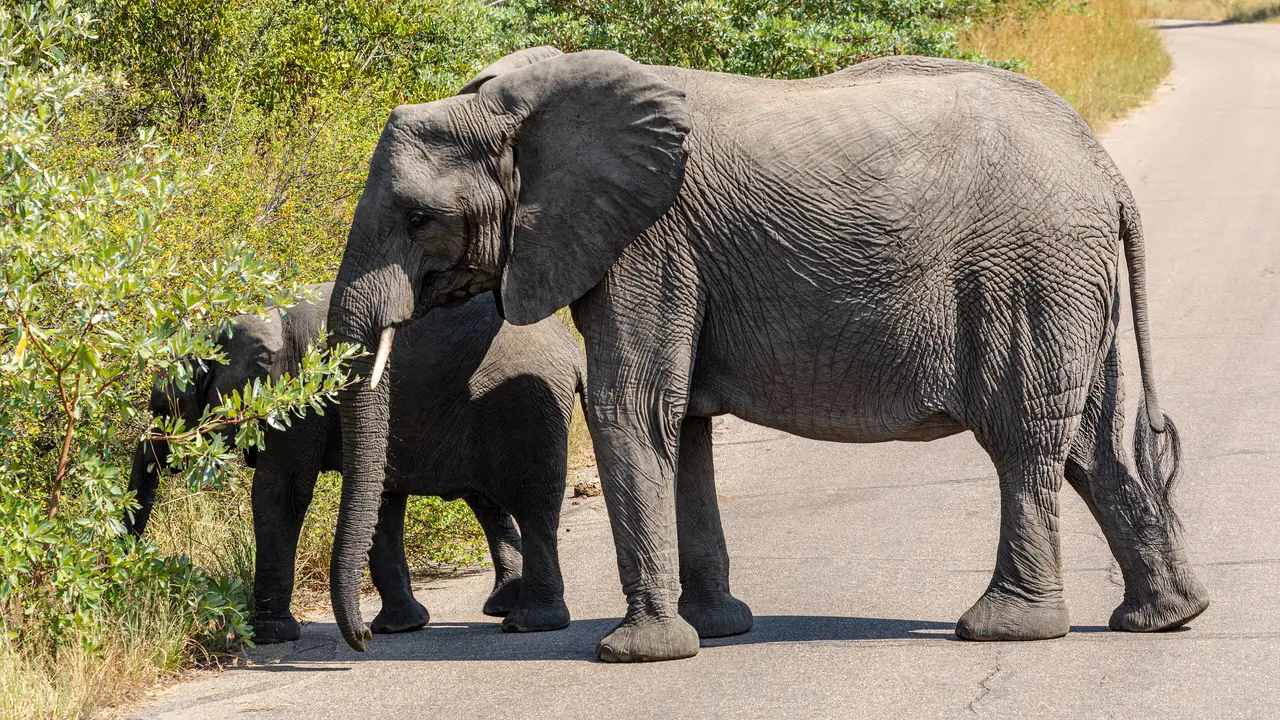
A first safari in South Africa comes in three kinds, and the money is very different. Driving yourself through Kruger National Park costs a conservation fee of R692 per adult per day for international visitors from 1 November 2026, plus somewhere to sleep. A guided stay in a private reserve beside Kruger costs from R29,600 per person per night sharing at Sabi Sabi’s Bush Lodge, the lodge used here as a benchmark. The third kind is a malaria-free park (Madikwe, Pilanesberg, Addo or a private reserve in the Eastern Cape), and that’s where anyone wary of malaria tablets should look first.
Kruger’s entrance gates don’t open until 05:30 in November and December, but SANParks gave sunrise at Berg-en-Dal as 04:57 on 16 November 2026. If you sleep outside the park, you miss that first half hour of light. Rest-camp gates open at 04:30 in November and December, so a bed inside the park puts you on the road at dawn, and SANParks’ guided morning drives leave half an hour before the gates open.
What each kind costs
The table uses each operator’s own price, checked on 16 November 2026. Park fees, levies and transfers are separate lines, and that’s where budgets go wrong. The malaria-free kind takes two rows, because Madikwe and the Eastern Cape sit far apart on price.
| Kind of safari | What the operator charges | Malaria |
|---|---|---|
| Kruger, self-drive | R692 per adult (12+) per day, international visitor, 1 Nov 2026 to 31 Oct 2027; beds extra | Malaria area |
| Private reserve beside Kruger (Sabi Sabi, Bush Lodge) | R29,600 per person per night sharing, 1 Mar 2026 to 28 Feb 2027, plus R450 levy | Malaria area |
| Madikwe (Tuningi Safari Lodge) | R13,700 per person per night sharing, 2026 rack rate (to 31 Dec 2026), meals and two drives included | Not on CDC’s list |
| Eastern Cape (Amakhala, Woodbury Tented Camp) | R6,340 per person per night sharing, 1 Oct 2026 to 30 Apr 2027, levies extra | Not on CDC’s list |
Kruger on your own
To fly in, Sabi Sabi’s getting-here page lists Airlink flights to Skukuza from Johannesburg and Cape Town and daily Airlink flights to Nelspruit from Johannesburg, Cape Town and Durban. Kruger covers nearly 2 million hectares, according to SANParks, with 148 mammal and 546 bird species on its lists. The price of entry is a daily conservation fee: R692 for an international adult (12 and over) and R345 for a child aged 2 to 11, valid from 1 November 2026 to 31 October 2027. Three days in the park is therefore R2,076 per international adult before any bed.
Gate times are what you’ll plan the day around. From the SANParks table, the entrance gates open at 05:30 in January, February, March, October, November and December, and at 06:00 from April to September. They close between 17:30 (May to July) and 18:30 (November to February). If you are driving yourself, read the car-hire checks before you choose a car for the park roads.
Camp gates open earlier in the hot months, at 04:30 in November, December and January. SANParks says the times may change without notice, so check them again before you go. You must be inside a camp or out of a gate by closing time, and late arrivals are allowed only in an emergency, until 21:00, for guests with a booked bed within 10 km of the gate. An escort costs R500 per vehicle.
Here are the rules that shape a day, and they’re enforced: 50 km/h on tar and 40 km/h on gravel, no leaving the vehicle outside designated areas, no driving off the road, and no drones. Every visitor needs a gate registration and indemnity form, printed and filled in before you arrive; SANParks trialled a digital version for day visitors at Crocodile Bridge Gate from 16 to 20 November 2026. Until 4 December 2026 the Skukuza Rest Camp main gate is shut for maintenance, with a temporary camp entrance from Hippo Circle Street. Kruger also caps the number of visitors each day: when the cap is reached, which SANParks says tends to happen on public holidays and long weekends, only guests with pre-booked accommodation get in, so day visitors on those dates should reserve the visit in advance (a booking fee applies).
Sleeping in the park
The 12 main rest camps, such as Skukuza, Letaba and Lower Sabie, have a shop, a petrol station and a restaurant or cafeteria. The smaller bushveld camps have no shops or restaurants, and they don’t take day visitors. You can occupy a unit from 14:00 on the day you arrive and must leave by 10:00 on the day you depart.
SANParks doesn’t print room prices on its Kruger rates page, and the park’s main page shows only ‘from’ prices for units free that weekend. It asks you to request a quote through its online bookings or by phone (+27 12 428 9111). Treat any number you see on a third-party site as a guess until the quote arrives, because it may not match your dates.
SANParks also runs guided drives from its camps. Morning drives leave half an hour before the gates open and last 3 to 3.5 hours in an open vehicle. Sunset drives take about three hours, night drives about two. Children under 6 aren’t allowed on any of them, and SANParks shows the price when you book.
Private reserves around Kruger
The private reserves on Kruger’s western edge sell the opposite of the self-drive: a guide, a tracker and a lodge that does everything else. Sabi Sabi, used here as the benchmark because it publishes its rates, covers 5,400 hectares, and says the fences between it and Kruger came down in 1993 so animals move freely. Its guides are allowed off the road, which a self-driver in the national park never is.
The Bush Lodge Luxury Suite costs R29,600 per person per night sharing, valid from 1 March 2026 to 28 February 2027, with VAT included. A conservation levy of R450 per person per night is added until 28 February 2027, and a 15% peak surcharge applies to arrivals between 20 December and 5 January. The rate includes open-vehicle drives by day and night, walking safaris, breakfast, lunch, dinner and drinks (champagne and the private wine collection excepted); gratuities are extra. Three nights for one person sharing therefore come to R90,150 outside the peak weeks, before tips, flights and airport transfers.
In summer the programme runs from a 05:30 wake-up, with the morning drive leaving at 06:00 and the afternoon drive at 16:30. You can drive there yourself or fly: on top of the Skukuza and Nelspruit flights above, Sabi Sabi lists daily scheduled flights from Johannesburg to its own airstrip. Sabi Sabi says it lies in a malaria area and asks guests to see a doctor or travel clinic first.
Malaria-free safaris
CDC’s South Africa page (updated on 23 April 2025, read on 16 November 2026) lists the malaria transmission areas: parts of KwaZulu-Natal, Limpopo and Mpumalanga along the borders with Mozambique and Zimbabwe, and Kruger National Park. North West and the Eastern Cape aren’t on it. That leaves several options; this guide covers four, and they’re quite different.
Madikwe Game Reserve (North West) is about 76,000 hectares on the Botswana border, with the Big Five plus wild dog and cheetah, and is roughly an hour by air from Johannesburg. Tuningi Safari Lodge’s own rate sheet gives R13,700 per person per night sharing from 1 January to 31 December 2026, with meals, local drinks and two game drives; transfers are extra. Reserve fees come on top: a Madikwe fact sheet that Madikwe Safari Lodge uploaded in June 2026 lists a road entrance fee of R180 per person (R240 airstrip landing fee if you fly in) and a guest conservation levy of R520 per person per night, and says the reserve raises them periodically, so confirm them when you book. For 2027 dates, ask Tuningi for its new rate. Guests who drive in after sunset aren’t allowed to self-drive inside the reserve.
Pilanesberg (North West) is run by North West Parks. There’s no rand figure here because the gate tariff is set by North West Parks and the numbers online come mostly from agents; ask the reserve for the current one.
Addo Elephant National Park (Eastern Cape) is, in SANParks’ words, a 30-minute drive from Gqeberha; from the main camp area it’s about 70 km and 1 hour 15 minutes by road to the city. SANParks calls it the Big 7 park because the marine side adds southern right whales and great white sharks. The conservation fee is R565 per international adult and R283 per child aged 2 to 11 per day from 1 November 2026 to 31 October 2027, with self-drive and guided drives available. The Garden Route in 10 days by car ends at Addo and Gqeberha, which makes it the easy add-on for a coastal trip.
Private reserves in the Eastern Cape include camps that cost less than the two lodges above. Amakhala Game Reserve describes itself as in the malaria-free Eastern Cape, and its Woodbury Tented Camp costs R6,340 per person per night sharing from 1 October 2026 to 30 April 2027, with meals, house drinks and two game drives; conservation levies, transfers and premium drinks are extra.
What the health agencies say about malaria
This is not medical advice, but it’s what the sources say and it should shape when you book. CDC recommends prescription medicine for travellers to Kruger, uMkhanyakude District in KwaZulu-Natal, the Mopani and Vhembe districts of Limpopo and Ehlanzeni District in Mpumalanga; for the districts with few cases it advises bite precautions only. It tells you to ask your doctor which medicine to take, and notes that you start it days before you travel and carry on during and after the trip. SANParks says the highest-risk period is November to April, the end of the summer rainy season, that the risk in Kruger is usually low even in summer, and that it advises everyone to take preventive medication; its page was written after an increase in diagnoses in 2017.
Fever is the symptom that matters. SANParks says to suspect malaria in anyone with an unexplained fever after being in a malaria area, and that symptoms can start 12 to 35 days after the bite, so a fever after you’re home counts. The National Institute for Communicable Diseases (NICD) publishes the national malaria risk map, dated December 2025 on its malaria page. See a doctor or travel clinic before you pay a deposit for anything in Kruger, and tell them your exact dates. The before-you-go checklist puts that appointment next to the passport and customs steps, and the safari insurance guide covers the gap between a remote lodge and a hospital.
Which months suit which park
| Months | Kruger and the private reserves | Malaria |
|---|---|---|
| May to September | SANParks’ dry season (April to September): traditionally the best game viewing, with sparse vegetation and water confined to rivers and waterholes. | Outside SANParks’ highest-risk window |
| October | Rains begin; SANParks gives October to March as the summer rain season | Outside the window; heat is building |
| November to March | Lush, but thicker foliage hides animals | Inside the window (November to April) |
| April | The dry season begins, still inside the window | Inside the window |
Outside the window the risk is lower, not absent: neither CDC nor SANParks limits its advice on preventive medication to the summer months. Madikwe’s lodge fact sheet calls it a year-round destination because its wildlife doesn’t migrate, and the Eastern Cape reserves have no malaria question to answer. The high season for lodges is December and January: Sabi Sabi’s 15% surcharge runs from 20 December to 5 January, and school holidays make Kruger’s gates busier.
Combining it with Cape Town and the coast
A few days in Cape Town can end in a lodge without a night in Johannesburg, thanks to the Skukuza flights; the cableway guide covers a day on the mountain first. The transport guide has the checks for domestic flights and the transfer at the far end. Ten days by car east of Cape Town can instead end at Addo; the Garden Route in 10 days shows how, and the Cape Winelands guide covers the first night out of the city. To have both, the 14-day itinerary drives the coast to Gqeberha and flies on to Kruger from there, direct to Mbombela or through Johannesburg.
Which kind for whom
Anyone happy to plan their own days and watch the rand should start with Kruger, and sleep inside the park so the dawn hour is theirs. If the budget stretches and you want a guide who can leave the road, a lodge beside Kruger is the other way in; before booking one, ask whether drinks, walking safaris and laundry are included, because lodges differ. Travellers who’d rather skip malaria tablets can look at Madikwe, Pilanesberg or the Eastern Cape, and the Eastern Cape pairs easily with the coast road from Cape Town.
Photos
Read also

Things to do · 7 min read
Whale Watching and Shark Cage Diving: Hermanus, Gansbaai
Updated · 17 November 2026Hermanus whale boat R1,580 per adult, Gansbaai cage trip R3,805 per international adult with the fee: season, drive times, refund rules and no-show sharks.

What to see · 6 min read
Boulders Beach Penguins: Boardwalk, Beach and Tickets
Updated · 17 November 2026Boulders penguins: R282 adult fee for overseas visitors, card-only gate, hours, 40 km from Cape Town, the Foxy Beach boardwalk and the steep beach ramp.

Towns · 8 min read
Cape Town Travel Guide: Areas, Mountain, Beaches, Safety
Updated · 17 November 2026Cape Town for first-timers: where to base yourself, the Table Mountain cableway at R475, Bo-Kaap, the Waterfront, beaches, day trips and safety notes.

Regions · 8 min read
Cape Winelands: Stellenbosch, Franschhoek, Paarl and the Law
Updated · 17 November 2026Cape Winelands from Cape Town: Stellenbosch, Franschhoek and Paarl compared, the R370 Wine Tram, tasting fees and drink-driving rules.