South African Food: Braai, Bobotie and Bunny Chow
What to order in South Africa, from braai and bobotie to Durban bunny chow, biltong and Cape Malay sweets, with practical tips for choosing.
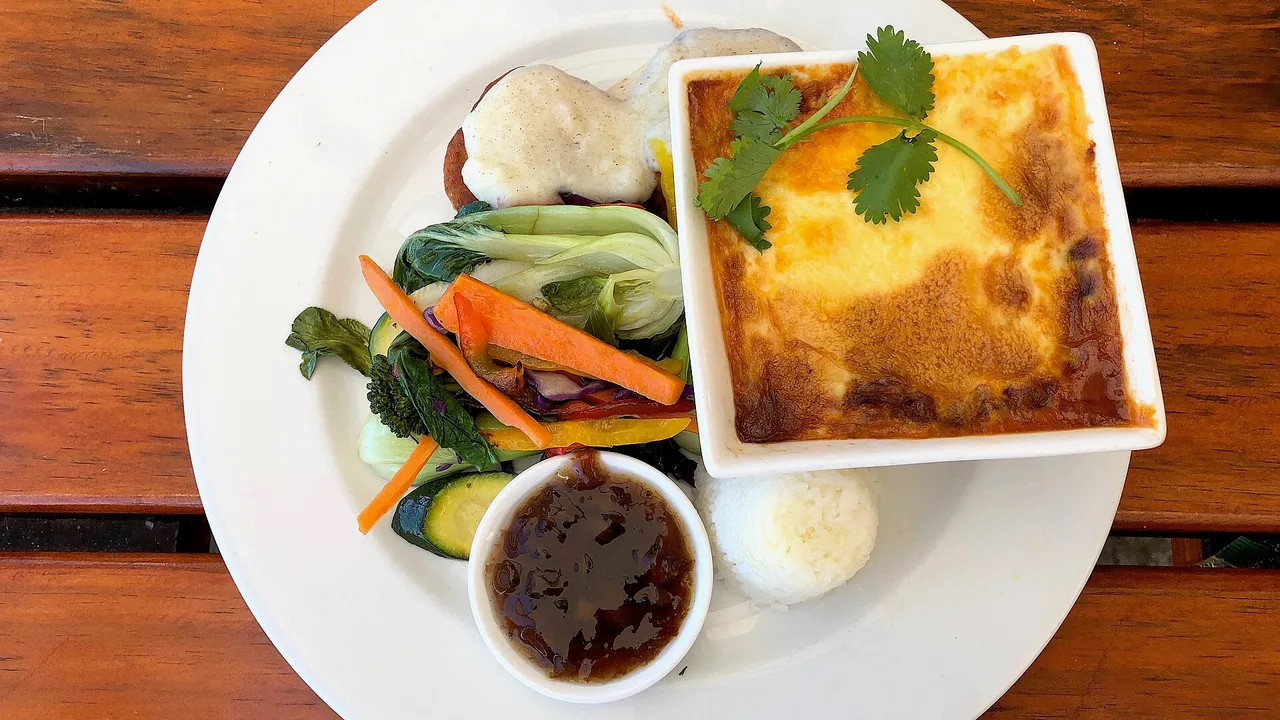
South African food is regional before it’s national. In Cape Town the dish to look for is bobotie, spiced mince with raisins baked under an egg custard; in Durban it’s bunny chow, a lamb, chicken or bean curry served in hollowed bread. The braai, meat cooked over coals, is almost always a social event, and biltong fills the gaps between meals.
Bobotie arrives as a plate of food; a braai can take the whole afternoon. A bag of biltong fits around a drive, while curry-soaked bread asks you to stop, sit down and give lunch your attention.
Braai and shisanyama
A braai means cooking over coals, with the meal and the gathering closely connected. The food might include boerewors, the spiced sausage, alongside other cuts of meat. Pap and chakalaka often join the plate. If you want a cooked meal with time to talk, this is a good place to begin.
Potjiekos is the slower relative: South African Tourism describes a stew of layered meat and vegetables, simmered for hours in a cast-iron pot over the coals. It’s the dish to say yes to if someone offers it at a braai.
Shisanyama is another name you’ll encounter around fire-cooked meat and shared meals. Cape Town Tourism describes it through the combination of grilled meat, sides and company. Choose the setting as carefully as the food: a sit-down meal, a lively gathering and a takeaway order answer different needs.
Before ordering, ask how the place works: whether you pick meat at a counter, choose from a menu or join a set meal, and which sides come with it.
A boerewors roll is a simpler introduction if you’re short of time. The sausage goes into a bread roll, with toppings varying by seller. If you avoid pork, ask about the meat mixture: recipes can use beef, pork or lamb.
Bobotie and the Cape Malay menu
Bobotie is a baked dish of spiced minced meat, often with raisins, under an egg-based topping. It offers a different kind of meal from a grill platter: soft, layered and suited to eating with a fork.
If you enjoy fruit with savoury food, bobotie is an easy choice. If you’d rather keep sweetness for dessert, look at the curries and stews beside it on the menu.
Cape Malay cooking gives you more to work with than a single dish. You might encounter tomato bredie, a stew, or denningvleis, a lamb stew with a sweet-and-sour flavour. Samoosas and potato waras can provide a smaller introduction before a main course. Read the whole menu before ordering a large starter platter; it can be more satisfying to leave appetite for the dish you came to try.
In Cape Town, Bo-Kaap is the obvious place to try Cape Malay food. Cape Town Tourism points visitors there for Cape Malay cooking tours and the neighbourhood’s family-run eateries, and its write-up of Biesmiellah, a Cape Malay restaurant in Bo-Kaap, describes bobotie served with yellow rice. If you book a cooking experience, ask what you’ll actually cook and eat before you pay.
Bunny chow in Durban
Bunny chow is curry served inside hollowed bread. Cape Town Tourism describes it as bread filled with a curry of your choice: chicken, lamb or beans. The bread is part of the meal, taking up the sauce as you work your way through it.
Choose the filling first. A bean curry can be as deliberate a choice as a meat version, particularly when you want to taste the sauce without ordering lamb or chicken. Then pick the size. A 2012 National Geographic Traveler post describes bunnies in quarter, half and whole loaves, while South African Tourism calls a bunny half a loaf filled with curry, so ask what the kitchen calls its portions and start small unless you’re sharing. A familiar word such as ‘medium’ can mean different things to different kitchens, so describe what you enjoy instead of guessing from a label.
Sit down for this lunch if you can. Balancing bread full of curry while trying to keep moving turns an appealing meal into a logistical exercise.
Durban is the natural place to put bunny chow on your food plans, but your route may take you elsewhere. If you find it on a Cape Town menu, enjoy it there instead of inventing a long journey for the sake of a checklist.
Cape Town has its own takeaway heavyweight, the gatsby. Cape Town Tourism’s fast-food guide calls it ‘iconic’, traces its roots to the Athlone area and describes a long sandwich filled with different meats, hot chips, spices and sauces. Ask how many people one is meant to feed before you order one each.
Biltong, wet or dry
Biltong is dried meat, bought as a snack and eaten on the move. Tell the seller whether you like it softer or drier, leaner or fattier.
Say it’s your first time and ask for a small bag of whatever the seller rates. You can go back for more once you know which end of the scale you like.
For the Garden Route drive, biltong is the road-trip snack: buy a small bag before a long driving day. Ask the producer how to store the particular product you buy. If you’re considering taking any meat product home, check your destination’s official import rules before packing it; a purchase made for a local snack and a souvenir crossing a border need different planning.
Pap, chakalaka and samp
Pap is a maize porridge; chakalaka is a spicy vegetable relish. Together they can bring contrasting textures to a grilled meal. Samp and beans is another combination worth recognising when you read a menu; Cape Town Tourism lists it beside pap and chakalaka as a shisanyama side.
Pap takes up the sauce, while chakalaka changes the flavour from mouthful to mouthful, so order one of each if the kitchen offers both. If the menu offers separate portions, clarify the serving size before everyone at the table orders the same accompaniment.
Koesister or koeksister
A koesister and a koeksister offer different textures. The Cape Malay koesister is an oval sweet with a softer, doughnut-like texture, often finished with coconut. A koeksister is the twisted pastry with a crisp exterior and syrup.
Choose the koesister if the soft version appeals; choose a koeksister for the crisp-and-syrupy contrast. If you’re sharing, comparing them makes a more interesting stop than buying a large box of something you haven’t tried. Ask the baker which is which when the display labels are unclear.
Rooibos is the South African drink to order with them.
Food along the route
Fit the food to the route you’ve already booked. In Cape Town, a Cape Malay meal in or near Bo-Kaap and a stop for koesisters can share a day with the sightseeing; on a Cape Winelands day the estates already set the pace, so add little else.
For a guided food outing, read the inclusions: tasting portions or a full meal, the meeting point and the way back.
If allergies, religious requirements or a restricted diet shape your meals, raise them with the provider before booking and again with the kitchen. Ask for an answer about the actual food being served, including sauces and garnishes.
For your first meal, choose the thing you’re most curious about. Bobotie suits an appetite for a savoury-sweet baked dish; bunny chow suits a curry lunch; a braai suits a meal with time around it. Leave room for the sides, learn the name of the sweet you liked, and let the next meal follow from that.
Photos
Read also

What to see · 6 min read
Boulders Beach Penguins: Boardwalk, Beach and Tickets
Updated · 17 November 2026Boulders penguins: R282 adult fee for overseas visitors, card-only gate, hours, 40 km from Cape Town, the Foxy Beach boardwalk and the steep beach ramp.

Towns · 8 min read
Cape Town Travel Guide: Areas, Mountain, Beaches, Safety
Updated · 17 November 2026Cape Town for first-timers: where to base yourself, the Table Mountain cableway at R475, Bo-Kaap, the Waterfront, beaches, day trips and safety notes.

Regions · 8 min read
Cape Winelands: Stellenbosch, Franschhoek, Paarl and the Law
Updated · 17 November 2026Cape Winelands from Cape Town: Stellenbosch, Franschhoek and Paarl compared, the R370 Wine Tram, tasting fees and drink-driving rules.

Car hire · 9 min read
Car Hire in South Africa: Documents and Road Safety
Updated · 17 November 2026Choose a hire car for South Africa, check the licence and payment terms, understand damage liability and plan left-hand driving and safe arrivals.